
The War on Drugs or Regime Change? Trump's Deadly Caribbean Crackdown
- Matt Bailey
- Nov 17, 2025
- 3 min read

by Benjamin Lo (Grade 9)
In recent weeks, U.S. President Donald Trump has dramatically escalated the United States’ pressure on Venezuela, confirming that he has authorized CIA operations within Venezuela and even suggested actions such as ground invasion.
The U.S. president has accused Venezuelan president Nicolas Maduro of narcotics trafficking and sending Venezuelan prisoners into the United States. However, actions taken by the U.S. President mirrors a much longer history of military intervention and foreign control by the country, which since the fall of the Soviet Union, has become the sole global superpower.
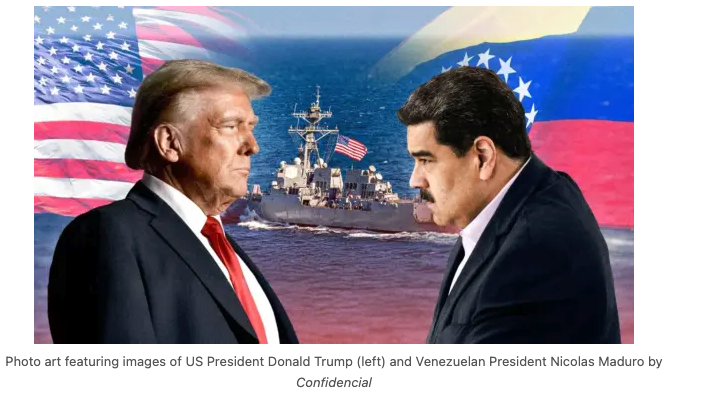
The Trump administration has called for a severe escalation of military forces within the Caribbean. Since early September 2025, the United States forces have carried out multiple airstrikes on vessels they claim are connected to drug smuggling networks that stem from Venezuela.
Arguably the most discussed attack by the U.S. on Venezuela, a strike on September 2 reportedly killed 11 people. Trump has said these 11 casualties were members of the Venezuelan gang Tren De Aragua. Afterwards, more strikes followed, with one in October killing 6 people. According to the president, these attacks were part of an “non international armed conflict” with drug cartels and terrorists.
However, the legality of the issue is heavily debated. Many argue that drug traffickers do not warrant the level of military force displayed by the U.S. president. Some, including New Hampshire Senator Jeanne Shaheen, have criticized the attacks, arguing that Trump is edging dangerously close to a war. On the other hand, supporters have defended and justified the attacks as “protective action” and “counter narcotics”.
The Venezuelan government has strongly condemned the States’ actions. President Maduro has connected the CIA’s involvement to a coup attempt. He has also accused Washington of violating international law. Reportedly, Caracas has started military exercises in response to the United States.

Beyond military actions and geopolitics, for Trump, these actions, which are part of his narrative of toughness on crime and drugs, are clearly done to appeal to his political base. However, at the same time, they risk pulling the U.S. deeper into Latin America. These actions could seriously anger Latino voters that supported him into power in 2024, and who have reportedly soured on him in recent polls.
States with large Latino populations, such as Nevada and Arizona, will be key swing states in the 2028 election. While other states with Latino bases, such as California and Texas, remain unlikely to shift in the presidential elections, they could certainly affect the midterms going into 2026.
These military operations, no matter how the U.S. president tries to spin them, could be part of a much larger plan to topple the current Venezuelan regime. The United States has a long and complex history of military intervention abroad. Since the late 19th century, the U.S. has repeatedly projected power across the globe, occupying Cuba and the Philippines. In the Cold War, Washington justified interventions across Latin America, Asia, and the Middle East as necessary actions to contain communism and to protect American interests. This ability of using military force as a tool of foreign policy and power projection, still holds tremendous power both domestically and abroad.
What started as general anti-drug actions have now spiralled into a far more dangerous situation. As the situation unfolds, the world will be watching to see how it plays out, and who is left standing when the dust settles.


Comments