
CRITIQUING ART AND WHERE THE WILD THINGS ARE
- Daniel McMahon
- Sep 23, 2024
- 13 min read

Updated: Nov 4, 2024
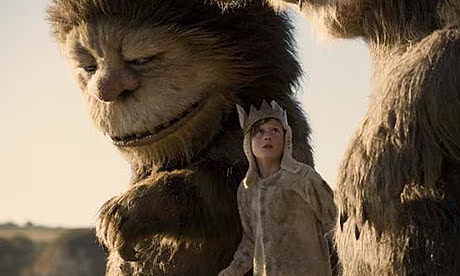
(Image Source: The Guardian)
By Narusorn Noah Lindsay ('26)
Every single time before I watch a movie, I look it up online to see the reviews just to see if it’s worth my time. Sometimes, despite bad reviews, I give it the benefit of a doubt out of the sheer potential that it might just be dumb fun (which was not the case for the horrendous Borderlands movie). Other times, a movie has decent reviews, but it just simply does not resonate with me in the slightest. Then there’s the golden possibility that you just might fall in love with something that is critically hailed as awful or mediocre (or as critics like to label it, “not true to the source material”). This was definitely the case for me and the 2013 adaptation of The Great Gatsby. Critics often call it out on not being faithful to Fitzgerald’s original vision, but I personally saw it as a more modernized interpretation. It was beautifully shot, well-performed, and emotionally potent. Maybe the aim for a movie is for the director to have complete creative control over what they seek to convey through a message, even if it is based on some other sort of source material. I personally feel like the more we limit the scope and remain purists when handling previously-told stories, the less we’re able to experiment and make something truly special out of an old formula.
Take Fantastic Mr. Fox for example, which is a very well-regarded adaptation of the Road Dahl novel. I read that book when I was 8 years old because of the insanely strong impression that Wes Anderson’s take on it left on me. I can tell you that I barely remember a single thing from the book, but can remember every single shot in the movie, despite not having seen it in years. Even when reading the book, I felt like it paled in comparison to the movie, and never would have appealed to me had I not experienced the movie first. These modern twists on old stories make it so old stories are able to reach audiences for generations to come, and as a community of people who enjoy and think about art, I feel like we should feel free to criticize, but not so quick to judge. We should embrace change to some sort of extent, and not just automatically criticize something when it isn’t “completely faithful to the source material”.
Spike Jonze’s “Where the Wild Things Are” for me, is the definition of a misunderstood masterpiece. I came into this movie expecting an absolute snooze fest because I had looked at the reviews prior, but came out absolutely dumbfounded at how much I thoroughly enjoyed it. It’s absolutely not perfect by any means, but regardless, it is a visually-stunning, powerful, and depressing story. The characters and emotions feel so real despite being this unrealistic and child-like metaphor. The soundtrack is absolutely ethereal, melancholy, and yet so down-to-earth. It is marketed as a children’s movie, but in reality it is so much more. It’s dark, unapologetic, odd, and beautiful in a way that only this movie is able to pull off. When I finished the film, I went and looked at what the reviews said, and I came back with profound sadness; the sadness of knowing that a vast portion of the people who watched this film absolutely missed the point, or maybe, were never meant to understand it.
Review
This film resonates with me on an incredibly deep level. Not only did I read the children's book when I was a kid and have absolutely ingrained its original artstyle into my brain, but I felt as though Max (the main character) was just an exaggerated version of me. I was once too a troubled, bratty, and creative kid who would act out against his mom because of their family’s circumstances. There was never a proper explanation for that feeling of being misunderstood and lonely at that age other than, “oh it’s just a part of growing up”. On top of that, most of the developmental years of my life were during the COVID-19 pandemic, providing me with seemingly endless hours of self-discovery and crippling loneliness. As a result of that, I often found myself escaping into my imagination when things got too confusing and overwhelming, much like Max does in this film.
The depressing tone of this film is one of the most criticized and indigestible qualities of it. People say it’s too dark to be a kid’s movie, and that it is nothing like the book, but in reality, it perfectly mirrors the dark undertones of the original book insanely well, adding this incredible complexity to the individual beasts and characters whilst also using the imaginative land as this effective metaphor for Max’s real life situation. This is where I realize that the target audience for this film was not actually kids at all, but people who are grown enough to digest these depressing themes and look past the almost nightmarish character design to truly resonate with the film, with that thread connecting the viewer and the movie being either past experiences or a knack for the oddly beautiful.
This movie speaks through its metaphors and incredible visual style. For example, when Max sails and is just entering the island, you get this sense of dread - the same sense that you get as a child when you are confronted with the unknown: the dying red sun with nothing but vast infinite blue to rest on . Then when Max finally sees an island and tries to steer his boat and dock on it, there are multiple claustrophobic shots of him struggling in the water, perfectly showcasing the determination and passion of a child contrasted with harsh reality - a theme that is often carried within this film despite being almost entirely unrealistic in its presentation.
Then Max meets the “wild things”, the real drawing point of the movie. I have never seen characters interact with each other so authentically within a film before, with so much attention to little details in the dialogue. I encourage you to watch this movie with headphones as I did because you get to hear every single character’s little back-handed and witty comments whenever there is a huge group conversation going on. Within this group of beasts, Max meets Carol, a troubled, lonely, and aggressive soul who is eerily similar to Max. Carol is presented at first as this sympathetic character, with a lot of nuance, understanding, and nothing but good intentions. He dreams of this technicolor dreamland where he and all of his friends can finally be happy again, and puts the weight on the imaginative Max’s shoulders to be their king and help them fight their overbearing feeling of sadness.
As the film progresses, we see the layers concealing Carol’s true character tear apart. We are shown the abusive dynamic between him and K.W., a beast that had previously abandoned the group of friends for some new friends. At first this might seem absurd - the idea that we are supposed to sympathize with giant ugly furry creatures that are dumb enough to believe a little kid is fit enough to be their king and almost eat him at the beginning of the film - but it is in the parallels between these characters and Max’s real life that we begin to see the real impact. See, Carol is just a more exaggerated version of Max. He is lonely and anxious that people are always leaving him. He hates the idea of the beasts being separate when sleeping and resents Max for not being able to bring Carol’s fantastic vision of a world where everybody got along into fruition. This is significant because earlier on in the movie, before Max leaves for the imaginary land, he often gets irrationally angry at his sister and his mom for not wanting to play with him and engage with his imaginative alternate realities that he builds for himself to escape real life, like pillow forts and telescopes that really are rocket ships. Though he has nothing but pure intentions, as he doesn’t want to be alone, his actions affect the other people around him and on the outside, like when his sister’s friends destroy his igloo and in turn he extracts revenge by destroying a gift his sister’s boyfriend got for his sister. It makes him look like a monster. Then we see K.W., Carol’s friend, but in reality, she is just a representation of Max’s family. You see, Carol is insanely jealous of K.W.’s new friends, and hates just the thought of them. He is unable to see what K.W. and what the rest of the beasts find special about them because he is blinded by jealousy. Max agrees with the sentiment, and they both share this moment of emotional resonance and understanding. This is because, again, earlier on in the film, Max sees nothing significant about his stepdad other than the fact that he is the anchor pulling his mother away from him. This is symbolized in the absurdity of the presentation of K.W.’s friends, as owls who simply just squeak. K.W. states multiple times that she does not explicitly like these friends more than the beasts, but instead likes them for different reasons. This completely goes past Carol’s head, and he is not even able to comprehend the idea that K.W. is friends with those owls. In reality, the hate stems from jealousy and a fear of being alone or inferior - the same reason why Max resents or holds this feeling of indifference towards his stepfather and acts out towards his mom. It is a feeling he does not understand, but it is in his very nature of being a child. K.W. is seen in this conflicting emotional teeter-totter between choosing her old or new friends, and it is also obvious that she has no ill intentions either, but it is rather the unfortunate and inevitable situation they’re in that leads to conflict.
Then at the end of the film we are greeted with the most intense and meaningful scene in the whole movie. Carol breaks down. He gets mad at Max when he realizes he had been lying about being a king, rips Douglas’s arm off and chases Max, threatening to eat him. We see Carol turning from this soft, sympathetic caring character to this villainous and terrifying monster. This is the same transformation that we see Max go through at the beginning of the movie, from this innocent little kid who wants to build an igloo, to someone who bites their mom and runs away from home. K.W. offers Max a place to hide in her stomach, and in this interaction we see Max’s realization and understanding of his mistakes. K.W. tells Max that she doesn’t understand what’s wrong with Carol, and Max doesn’t even speak about Carol in a bad tone despite him threatening to eat Max, because Max understands him. Not only does he understand Carol, but at this point he also understands the perspective of K.W., or his mom. He then returns home and hugs his mother like nothing happened.
I understand that one of the weirdest parts about this film is the fact that all of the beasts do actually have these insanely intricate human-like personalities, whereas in the children’s book, they all inhabit animal-like qualities. I think this provides this incredible life, soul, and character to all of these characters that seem to lack a life or soul. Every single beast is displayed in some sort of fragmented and flawed light, with their insecurities and uncertainties out on full display. I feel like this reflects the fact that this is a kid’s world, where people or characters are simply just not able to hide their raw emotions behind a self-deprecating sense of humor due to a child’s very one-dimensional understanding of human emotion, which I find quite ironic since some of the funniest and most memorable parts of this film for me are the moments when the characters become too transparent that it’s almost cruel. For example, like when they’re throwing wads of mud at each other and repeatedly hit Alexander, who is this pitiful character who isn’t taken seriously at all and is always yearning for attention, or like when Carol gets so visibly petty and jealous of K.W. 's new friends that he makes a gruesome and inappropriate reference to Max’s idea of making an automatic brain-removing door that would activate on any unrecognized guest. I feel like it’s in these pockets of dark and odd self-awareness and that this movie really finds its footing, and in the gritty themes that it handles with child-like ease - complex emotions that are displayed with such naked honesty that leaves viewers bewildered at how unconventional and raw it all is, while also presenting them in a way that makes it so human and understanding. This is what makes the movie so incredibly special.
Significance
The biggest crime to commit when watching this film, or any form of art really, is trying to condense it or put it in a box. By the metrics of it being a family-friendly kid’s movie, it fails. The reason it does is because it was not trying to check that box at all. To truly appreciate this film for all that it does right is to realize how incredibly rare and real it is, to do all of the things that it does in the way that it does. Critics are too quick to reduce films into numbers just for the sake of making them more easy to present without actually taking the time to process and reevaluate the film. Anything they don’t understand or appreciate is irrelevant and poorly-executed, whilst a more agreeable film that builds upon a formula that is already often used and oversaturated is hailed a masterpiece because it’s often easier to digest. It’s a tried and tested method. A number score doesn’t do justice to the multiple layers of emotions and opinions felt toward a work of art, though unfortunately that is what people often resort to.
Or on the contrary, if a work of art is so weird, unconventional, and out there, critics and audiences alike will often praise it because it makes them look more seasoned, cultured, and complex, even if they don’t understand it fully. This culture is one of the things criticized or brought to question in the film American Fiction. In American Fiction, an excellent author struggling to achieve commercial success, who compromises his artistic integrity in order to make a best-selling book - a book that he hates because it’s a satirical book seemingly mocking his culture that is taken seriously. Critics love it because it’s so raw and empowering, but in reality they don’t truly understand a single thing about the real intentions behind writing that novel. Sometimes the world of critiquing art feels like a giant joke that everyone plays along with; a bandwagon you jump on and add your completely uninteresting take to to seem cool and a “reliable source”. There is a huge lack of individual identity and self-discovery in the things we consume because of countless lists, thanks to the likes of Letterbox and rateyourmusic.com. Don’t get me wrong, these are incredible platforms to share opinions, but they have sparked this culture on the internet that is so incredibly pretentious, obnoxious, and devoid of any real understanding or personality that it really takes away from the enjoyment of art. Everybody amasses into a giant blob that shouts a single opinion at another giant blob to see whose voice is louder. From lists of “essential films” to “albums you need to hear before you die”, these novelties have turned from good fun and conversation starters to something people hold in too high of regard and causes them to end up draining the life out of the art they’re supposed to be enjoying and preventing them from unraveling the layers of art they enjoy independently, defeating the whole purpose.
Let’s shift briefly from films and talk about another form of art and entertainment I thoroughly enjoy: music. There’s this one quote I live by when I listen to music and try to gauge how much I like it: “Refuse to let these assholes reduce your art to rankings”, (Milo on objectifying rabbits). Real artists who make things not strictly for commercial success and rather for genuine artistic purposes will not compromise their vision to make it more accessible to other people. The irony of this line is that the album on which Rory Allen Philip Ferreira, otherwise known as Milo, says this line on, is also his worst-rated album. Anthony Fantano, the most influential music critic of modern day, gave it a 5, despite liking Milo’s other records quite a bit, and on rateyourmusic.com, it has a score of 3.21, the lowest in his entire discography. Now I’m not saying there’s any significant correlation between Rory’s statement and the score this record got, but I personally find that record one of if not his most emotionally-potent and artistically-distinct work, with a style of bright and colorful instrumentals he doesn’t use in other points in his career and meaningful, tasteful, and reflective allusions to his dead best friend, the record is an incredibly unique and well-put-together work of art. Had I just looked at the score that the record got and avoided it completely, I would be completely missing out on something truly special and influential to my life.
Now let’s go back to the music critic for a second, Anthony Fantano. See Anthony is probably my favorite critic because he has introduced me to some of my favorite artists, even though we don’t always seem eye-to-eye on everything. This is what for me a critic should strive to do: develop a reputation of being honest about everything and therefore garnering trust in your opinion to bring a platform to more talented and lesser-known artists, which is something I think Anthony excels at. However, he is simultaneously widely respected and hated at the same time, by fans of artists who he criticizes. For example, when he gave Destroy Lonely and Ken Carson’s newest records bad scores, both of whom are signed to the world-renowned Playboi Carti’s opium label - all artists with cult followings - Fantano’s divorce papers got leaked to the public in an outrage. Online opinions should not hold this much weight and hate in someone’s mind enough to commit an act like this, and the fact that this even goes on says a lot about the current culture regarding opinions about forms of entertainment. If we are actively working toward suppressing other people’s right to express their opinions on something we hold dear just because it doesn’t align with ours, we are collectively stripping the joy away from every little thing we were given as a gift. If producing art was based on making the most accessible and commercial thing possible, then none of it would mean anything. If critiques about art were based on trying to form the most agreeable takes, then every single word would lose its weight.
Now this is where I acknowledge that I’ve been hypocritical. I started this movie being one of those people that listened too much to critics and ratings, adapting this habit of searching up the reviews for every single movie I watch. I just can’t help it, as that feeling of being able to share and discuss with other people is what makes movies so great to me. The trick, however, is to not take it too seriously and let it influence my experience with the film too much. Had I listened to the critics that said this movie was boring and agonizing, I would’ve missed out on something special, even though they are completely entitled to feeling whichever way they want about the film. I’m infinitely grateful Jonze didn’t compromise his vision to deliver something that he knew probably wasn’t going to go over well with a lot of people, but really left a significant effect on the select few who he knew would really love it. Had those pieces of human fecal matter that leaked Fantano’s divorce papers listened to his opinion and not listened to their favorite artist, perhaps they would’ve missed out on something insanely dear to them too. However, it is not the job of critics to conform to every single thing that the audience finds to be good, and it is not an objective fact that something is good or bad based on the ratings it got. Art is quite literally built on this profound principle that there should be disagreements and conversations about it, and that another man’s opinion on a work of art is in its own right completely valid, but also something that doesn’t apply to you depending on how you personally feel and resonate with the work of art. Don’t take ratings too seriously, and try to thoroughly understand why and how you like things, or else you lose the very essence of your individuality, character, and your love for expression.


Comments